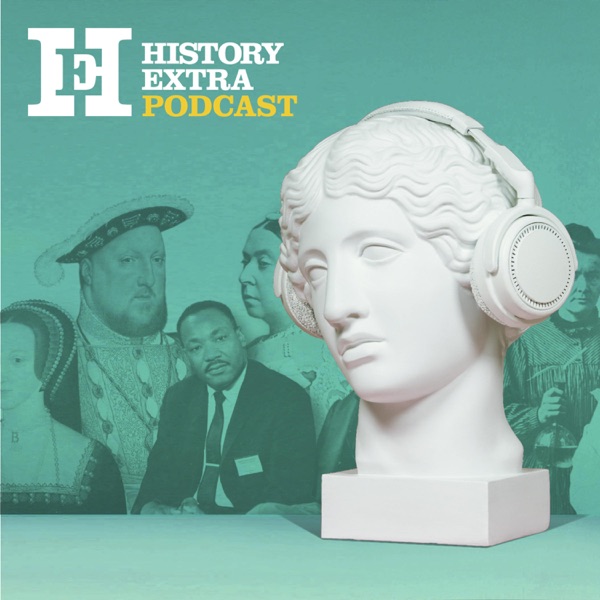

The HistoryExtra podcast brings you gripping stories from the past and fascinating historical conversations with the world's leading historical experts.
HistoryExtra is a free history podcast, with episodes released six times a week. Subscribe now for the real stories behind your favourite films, TV shows and period dramas, as well as compelling insights into lesser-known aspects of the past.
We delve into global history stories spanning the ancient world right up to the modern day. You’ll hear deep dives into the lives of famous historical figures like Cleopatra, Anne Boleyn and Winston Churchill, and explorations of intriguing events from the past, such as the Salem witch trials, the battle of Waterloo and D-Day.
Expect fresh takes on history, helping you get to grips with the latest research, as we explore everything from ancient Roman archaeology and Viking mythology to Renaissance royals and Tudor kings and queens.
Our episodes touch on a wide range of historical eras – from the Normans and Saxons to the Stuarts, Victorians and the Regency period. We cover the most popular historical subjects, from the medieval world to the Second World War, but you’ll also hear conversations on lesser-known parts of our past, including black history and women’s history.
Looking at the history behind today’s headlines, we consider the forces that have shaped today’s world, from the imposing empires that dominated continents, to the revolutions that brought them crashing down. We also examine the impact of conflict across the centuries, from the crusades of the Middle Ages and the battles of the ancient Egyptians to World War One, World War Two and the Cold War.
Plus, we uncover the real history behind myths, legends and conspiracy theories, from the medieval murder mystery of the Princes in the Tower, to the assassination of JFK.
Featuring interviews with notable historians including Mary Beard, Tracy Borman, James Holland and Dan Jones, we cover a range of social, political and military history, with the aim to start conversations about some of the most fascinating areas of the past.
Unlock full access to HistoryExtra.com for 6 months for just 99p https://www.historyextra.com/join/
2641 - How to survive a day in the 14th century
00:00
00:00
The HistoryExtra podcast brings you gripping stories from the past and fascinating historical conversations with the world's leading historical experts.
HistoryExtra is a free history podcast, with episodes released six times a week. Subscribe now for the real stories behind your favourite films, TV shows and period dramas, as well as compelling insights into lesser-known aspects of the past.
We delve into global history stories spanning the ancient world right up to the modern day. You’ll hear deep dives into the lives of famous historical figures like Cleopatra, Anne Boleyn and Winston Churchill, and explorations of intriguing events from the past, such as the Salem witch trials, the battle of Waterloo and D-Day.
Expect fresh takes on history, helping you get to grips with the latest research, as we explore everything from ancient Roman archaeology and Viking mythology to Renaissance royals and Tudor kings and queens.
Our episodes touch on a wide range of historical eras – from the Normans and Saxons to the Stuarts, Victorians and the Regency period. We cover the most popular historical subjects, from the medieval world to the Second World War, but you’ll also hear conversations on lesser-known parts of our past, including black history and women’s history.
Looking at the history behind today’s headlines, we consider the forces that have shaped today’s world, from the imposing empires that dominated continents, to the revolutions that brought them crashing down. We also examine the impact of conflict across the centuries, from the crusades of the Middle Ages and the battles of the ancient Egyptians to World War One, World War Two and the Cold War.
Plus, we uncover the real history behind myths, legends and conspiracy theories, from the medieval murder mystery of the Princes in the Tower, to the assassination of JFK.
Featuring interviews with notable historians including Mary Beard, Tracy Borman, James Holland and Dan Jones, we cover a range of social, political and military history, with the aim to start conversations about some of the most fascinating areas of the past.
Unlock full access to HistoryExtra.com for 6 months for just 99p https://www.historyextra.com/join/
Epizód összefoglalója
This episode explores the sensory experiences and daily realities of 14th-century England, examining how living conditions, clothing, and diet were transformed by the Black Death. The discussion delves into the physical environment, from the prevalence of wood smoke and the fear of miasma to the constant presence of occupational hazards and violence.
Beyond the hardships of low life expectancy and extreme darkness, the episode investigates the social structures of the era, including gender roles in agricultural labor and the use of humor as a coping mechanism against the era's brutal realities.
Fejezetek
Kattints egy fejezetre, hogy közvetlenül ahhoz a pillanathoz ugorj
Kiemelések
the living standards change remarkably over the course of the 14th century, principally because of a certain thing right in the middle of it called the Black Death
00:01:05 · The speaker explains how the plague acted as a turning point for social and economic conditions in England.
In places like Oxford, where you've got lots of young men with knives on their belts, you're talking about levels of violence which probably compare with Dodge City at the height of the Wild West
00:17:06 · The speaker compares the high homicide rates in certain medieval English towns to the legendary violence of the American Wild West.
The church bell is going to, in the 14th century, reach everywhere across the parish. And you're going to live your life very much by that church bell.
00:20:41 · The speaker describes how the sound of church bells served as a primary temporal and social guide for medieval people.
You have to make use with rush lights, which are stretches of straw which have been soaked in tallow and held on a metal frame to burn.
00:27:26 · This describes the primitive and smelly light source used by the poor due to the high cost of beeswax.
The median age in 14th century England is about 20.
00:30:02 · The speaker provides a stark statistic regarding the low life expectancy and high mortality rates of the era.
This episode explores the sensory experiences and daily realities of 14th-century England, examining how living conditions, clothing, and diet were transformed by the Black Death. The discussion delves into the physical environment, from the prevalence of wood smoke and the fear of miasma to the constant presence of occupational hazards and violence.
Beyond the hardships of low life expectancy and extreme darkness, the episode investigates the social structures of the era, including gender roles in agricultural labor and the use of humor as a coping mechanism against the era's brutal realities.
Közzétéve21 júl. 2026
Időtartam37:05
Epizódok
2641-
How to survive a day in the 14th century
Meghallgatva
This episode explores the sensory experiences and daily realities of 14th-century England, examining how living conditions, clothing, and diet were transformed by the Black Death. The discussion delves into the physical environment, from the prevalence of wood smoke and the fear of miasma to the constant presence of occupational hazards and violence.
Beyond the hardships of low life expectancy and extreme darkness, the episode investigates the social structures of the era, including gender roles in agricultural labor and the use of humor as a coping mechanism against the era's brutal realities.
21 júl. 2026
2640-
Bess of Hardwick: life of the week
Meghallgatva
This episode explores the life of Bess of Hardwick, a powerful Tudor social climber who used strategic marriages to amass immense wealth and influence. The discussion covers her early financial hardships, her successful second marriage to Sir William Cavendish, and her eventual political clash with Queen Elizabeth I following a scandal involving Lady Catherine Grey.
The narrative further details her imprisonment in the Tower of London, her complex relationships with figures like Mary Queen of Scots, and her architectural legacy through Hardwick Hall. Ultimately, the episode reflects on her remarkable resilience and status as a woman who defied Tudor conventions to become one of the wealthiest women in England.
20 júl. 2026
2639-
Alliance and acrimony: a history of Jewish-Muslim relations
Meghallgatva
19 júl. 2026
2638-
Who wrote the Odyssey?
Meghallgatva
18 júl. 2026
2637-
1966: The World Cup that changed a nation
Meghallgatva
16 júl. 2026
2636-
How Rome really conquered Britain
Meghallgatva
14 júl. 2026
2635-
Edward Colston: life of the week
Meghallgatva
13 júl. 2026
2634-
Was Elizabeth Báthory really a serial killer?
Meghallgatva
12 júl. 2026
2633-
What did the American Revolution really achieve?
Meghallgatva
11 júl. 2026
2632-
The captain's wife who took command
Meghallgatva
09 júl. 2026
2631-
What could you eat in Georgian London?
Meghallgatva
07 júl. 2026
2630-
Pablo Picasso: life of the week
Meghallgatva
06 júl. 2026
2629-
When football became a weapon of the Cold War
Meghallgatva
Historians Tony Shaw and Alan McDougall discuss their book 'Cold War Football', exploring how football matches served as tools for political maneuvering and ideological confrontation. The episode examines significant historical moments, including the 1945 Arsenal vs. Dynamo Moscow match, the political impact of the 1954 World Cup on Hungary, and the 1964 European Nations Cup between Spain and the Soviet Union.
The discussion also covers the use of football for power projection in Zaire and Yugoslavia, the tragic case of East German player Lutz Eigendorf, and how the collapse of communism led to the decline of Eastern European football infrastructure. The episode concludes by reflecting on how the globalization of football and the end of the Cold War shifted dominance toward Western European clubs.
05 júl. 2026
2628-
How Britain lost America
Meghallgatva
Professor Adam Smith and Eleanor Evans discuss the strategic complexities of the American Revolutionary War, focusing on why the British Empire struggled to achieve a decisive victory due to logistical challenges and competing colonial interests. The discussion explores George Washington's unique leadership style, emphasizing his ability to maintain the Continental Army through attrition and endurance rather than grand strategic victories.
The episode also examines the significance of the Battles of Saratoga in securing a French alliance and how the war became a widespread societal struggle. Finally, it explores the historical significance of Valley Forge and Gettysburg as physical sites used to renew American patriotism and the narrative of American endurance.
04 júl. 2026
2627-
A history of the US in 100 unexpected objects
Meghallgatva
Roman Mars introduces his new podcast series, 'A History of the United States in 100 Objects,' which utilizes everyday artifacts like the Century Safe and the Blueback Speller to reframe American history and explore shifting cultural values. The series examines how mundane items can serve as portals to understanding profound historical struggles and the asymmetry of the historical record.
The discussion further explores how standardization and objects reflect shifting geopolitics, the formation of identities, and the complexities of memory in a digital age. The speakers delve into the tension between preserving historical ideals and the challenges of navigating a future shaped by algorithmic curation and the illusion of digital permanence.
02 júl. 2026
2626-
An A-Z history of the English alphabet
Meghallgatva
This episode traces the extraordinary journey of the alphabet, from its origins in Egyptian hieroglyphs and the simplified West Semitic systems of 1900-1800 BC to the pivotal Greek addition of vowels. The narrative follows the script's expansion through the Phoenicians and its eventual evolution into the Latin alphabet, shaped by Roman influence, the Germanic tribes, and the linguistic shifts following the Norman Conquest.
The discussion further explores the complexities of the modern English alphabet, examining the redundancy of certain letters, the historical purpose of silent letters, and the origins of alphabetical order. Finally, the episode considers how modern technology, such as AI and spell checkers, acts as a force for standardization, while suggesting that the future of writing remains tied to broader global shifts.
30 jún. 2026
2625-
Abigail Adams: life of the week
Meghallgatva
Historian Laura Kamoy discusses her new historical novel, 'A Founding Mother,' which explores the life of Abigail Adams during the American Revolution. The episode delves into Abigail's resilience and entrepreneurial spirit as she managed finances and business ventures while her husband, John Adams, attended to political duties.
The conversation also highlights Abigail's progressive role in shaping early American social politics, including her advocacy for women's rights, her opposition to slavery, and her dedication to education. The episode concludes by reflecting on her legacy of financial independence and her commitment to empowering the women in her life.
29 jún. 2026
2624-
The astonishing laws of medieval Wales
Meghallgatva
This episode explores the historical context and intricate nature of medieval Welsh law, examining the fragmented geography of the March and the manuscript traditions of the Laws of Hywel Dda. The discussion delves into how these laws functioned as a practical tool for social stability, utilizing compensation and individual responsibility rather than top-down royal control.
Beyond historical origins, the episode examines specific legal provisions regarding gender identity, divorce, and property, noting the surprisingly modern approach to personal identity in certain contexts. Finally, the discussion covers the law's role as a unifying force in Wales until its eventual abolition following the Act of Union in 1536.
28 jún. 2026
2623-
Inside the Declaration of Independence
Meghallgatva
This episode explores the transition from colonial resistance to the formal pursuit of independence during the American Revolution. It examines how British government actions and the King's proclamations pushed the colonies toward secession, positioning the Declaration of Independence as the culmination of local grievances and a growing recognition of de facto independence.
The discussion further delves into the philosophical foundations of the Declaration, specifically its roots in John Locke's social contract theory and the principle of government by consent. The episode also covers the document's domestic dissemination through public readings and its complex legacy, noting how enslaved people immediately utilized its rhetoric to advocate for their own freedom.
27 jún. 2026
2622-
Cannibalism, heartbreak and Madame Guillotine: George Forster's extraordinary life
Meghallgatva
This episode explores the extraordinary life of 18th-century traveler George Forster, tracing his journey from his early expeditions in Russia to his voyages through the South Pacific. The discussion delves into how his unique upbringing and observations of inequality shaped his empathetic, open-minded perspective on humanity and indigenous cultures.
Beyond his travels, the episode examines Forster's personal struggles, his literary impact as a vivid travel writer, and his radical political involvement in the Mainz Republic and the French Revolution. Ultimately, the episode highlights Forster's enduring legacy as a pioneer of human rights and a profound advocate for the beauty of human diversity.
25 jún. 2026
2621-
Charlotte Brontë's life through clothes
Meghallgatva
Historian Eleanor Horton discusses her research into Charlotte Brontë's surviving clothing collection, which reveals a more fashion-engaged and globally connected woman than previously imagined. The conversation explores how Brontë's clothing, specifically her paisley dress and a uniquely constructed corset, may reflect her personal struggles with appearance and inner turmoil.
The episode further explores the emotional complexities reflected in Brontë's wardrobe, ranging from the restrictive nature of her early garments to the vibrant blue alpaca dress worn for a significant meeting with Thackeray. The discussion delves into the tension between pragmatism and romance in her wedding attire and argues for reframing Brontë as a three-dimensional woman separate from her famous literary characters.
23 jún. 2026
2620-
Emma Goldman: life of the week
Meghallgatva
This episode explores the life and political evolution of Emma Goldman, tracing her journey from a Russian immigrant to a prominent American anarchist. The discussion details her radicalization following the Haymarket Affair, her intellectual partnership with Alexander Berkman, and her advocacy for self-organization and social liberation.
The episode further examines the evolution of Goldman's political thought, from addressing women's oppression to critiquing the Bolshevik regime and experiencing deportation. Finally, it reflects on her enduring legacy as an anarchist feminist, addressing misconceptions regarding her public image and the modern relevance of her ideas.
22 jún. 2026
2619-
Stealing the V2 rocket: Britain’s secret WW2 intelligence coup
Meghallgatva
This episode explores the terrifying nature of Hitler's V2 rocket, a supersonic weapon capable of striking Allied cities without warning. The discussion details the technological leap the V2 represented over the V1 and the critical intelligence efforts led by the Polish resistance, who gathered rocket debris to uncover the weapon's lack of a guidance system.
As the Allies shifted their strategy from attempting to jam the rockets to targeting production and launch sites, the episode also touches upon the guest's work in television production and his documentary series regarding the search for Nazi gold.
21 jún. 2026
2618-
The road to the American Revolutionary War
Meghallgatva
Eleanor Evans and Professor Adam Smith explore the complex origins of the American Revolution, moving beyond the simple narrative of freedom versus tyranny to examine the economic prosperity of the 18th-century colonies and the constitutional friction caused by British taxation. The discussion traces the escalation of tensions from the Stamp Act to key flashpoints like the Boston Massacre and the Tea Act, which ultimately unified the colonies through the First Continental Congress.
The episode also examines the transition from negotiating constitutional rights to active resistance following the outbreak of hostilities at Lexington and Concord. The conversation delves into how figures like Thomas Jefferson and Patrick Henry framed the conflict as a defense of existing rights and analyzes the powerful, yet controversial, use of slavery metaphors in the rhetoric of the era.
20 jún. 2026
2617-
The protestant missionaries that didn't change the world
Meghallgatva
Author Alec Ryrie discusses his research into the often-overlooked history of early Protestant missionary efforts, challenging the narrative that these missions only began in the late 18th century. He explores the geographical scale of these attempts and the fundamental tensions between the desire to convert populations and the impulse to transplant European cultural and structural models.
The episode further explores the conflicts within missionary efforts, specifically the tension between Christianization and the economic necessity of the Atlantic slave trade, as well as the intense religious rivalry between Protestant and Catholic missionaries. The conversation concludes by examining missionary strategies, such as the use of printed primers, and the unintended consequences of failing to understand deep cultural chasms.
18 jún. 2026
2616-
Strangers and aliens in Tudor England
Meghallgatva
Nandini Dass explores how the lives of ordinary migrants, such as Flemish hatmakers and English merchants, reveal a globalized Tudor England that contradicts the myth of an insular island. The discussion examines how the Tudor monarchy utilized immigrant labor and artistry to project power, and how the Reformation further complicated identities through religious allegiance.
This exploration extends into the 16th and 17th centuries, examining how migration, trade, and colonization shaped notions of belonging. By shifting the focus from monarchs to everyday people like laborers and migrants, the conversation illustrates that national identity is not a fixed inheritance, but a continuous process of negotiation, adaptation, and racialization driven by global movement.
16 jún. 2026
2615-
Alexander the Great: life of the week
Meghallgatva
Historian Edmund Richardson discusses his new biography of Alexander the Great, utilizing recent archaeological discoveries to provide a more human perspective on the Persian Empire and Alexander's complex upbringing under Philip II and Aristotle. The episode explores the scale of the Persian superpower, the tactical brilliance and technological advantages that fueled Alexander's military success, and his significant journey to the Oracle of Amun.
The discussion also examines the aftermath of Alexander's death, likely caused by typhoid, and the subsequent fragmentation of his empire. Ultimately, the episode reflects on Alexander's legacy, contrasting his mastery of conquest with his lack of a cohesive administrative plan and the enduring myth of his humanity.
15 jún. 2026
2614-
What myths do we tell about royal women?
Meghallgatva
Kate Williams examines how historical narratives of powerful queens, from Hatshepsut and Cleopatra to Marie Antoinette and Queen Victoria, have been intentionally distorted through misogynistic tropes. The discussion explores how female monarchs have been characterized as emotional, sexualized, or incompetent to delegitimize their political agency and consolidate male power.
The episode further investigates the use of queenship as a tool for political propaganda and empire-building. By contrasting the manufactured domesticity of Queen Victoria with the scapegoating of figures like Marie Antoinette, the conversation highlights the impossible standards placed upon women in power and the importance of controlling one's own historical narrative.
14 jún. 2026
2613-
Cleopatra’s death – and cultural afterlife
Meghallgatva
This episode explores the final days and enduring legacy of Cleopatra, examining the political tensions between her, Mark Antony, and Octavian following the Battle of Actium. The discussion delves into the mysteries surrounding her death, the search for her lost tomb in Alexandria, and the historical biases in Roman sources that have shaped her modern reputation.
Beyond the sensationalized narratives, the conversation highlights Cleopatra's role as an intellectual leader and her strategic use of cultural identity. The episode also addresses the historical basis for her lifestyle and concludes by reflecting on her significance as the final pharaoh of Egypt.
13 jún. 2026
2612-
Masters of disinformation: how British spies played dirty in the Cold War
Meghallgatva
This episode explores the history of the Information Research Department (IRD), a top-secret British unit active during the Cold War that specialized in black propaganda, including forgeries and fakes. The discussion details the department's unconventional personnel and bizarre operations, such as using fake ghost recordings to influence Indonesian politics.
The episode further examines various covert operations, including a 'hippie' themed plot in Bulgaria and the moral complexities of using forgeries to spread information. Finally, the discussion covers the release of archival files and the historical significance of understanding these past propaganda techniques in the context of modern information warfare.
11 jún. 2026
2611-
Churchill's toughest decision
Meghallgatva
This episode explores the controversial 1940 British attack on the French fleet at Mers-el-Kébir, driven by Winston Churchill's fear that the powerful French Navy would fall into German hands. The discussion covers the strategic importance of the fleet, the breakdown of diplomatic negotiations, and the immense pressure on Churchill to prevent a shift in the global balance of power.
The episode also details the human cost for French sailors and the long-term diplomatic fallout between Britain and France. It examines the strategic motivations of Churchill and Roosevelt, the role of communication breakdowns in the tragedy, and the historical perspectives regarding the justification of the attack.
09 jún. 2026
2610-
Henry Paget: life of the week
Meghallgatva
This episode explores the life and legacy of Henry Padgett, the 'Dancing Marquess' of Anglesey. The discussion traces his rise to celebrity, his aristocratic background, and the rumors surrounding his paternity, alongside his public persona characterized by extravagance and social non-conformity.
The episode further examines the historical use of the term 'queer' to analyze figures who challenged gender and sexual norms. It details the Marquess's financial downfall, his theatricality, and how modern interpretations continue to speculate on his identity and the shifting social landscapes of the 1890s.
08 jún. 2026
2609-
The hidden history of female sexual pleasure
Meghallgatva
Historian Kate Lister explores the history of female pleasure, challenging the narrative that women's sex drives are inherently weaker than men's. The episode traces the evolution of sexual control, from ancient Mesopotamian deities and the medicalization of the 'wandering womb' in Greece to the rise of Christianity and the pathologization of desire through concepts like nymphomania.
The discussion further examines the contradictions of Victorian morality, the patriarchal shaping of lesbian history, and the transformative social and economic impact of the 20th-century birth control movement. The episode concludes by reflecting on modern sexual liberation and the ongoing need to dismantle societal scripts to prioritize female pleasure.
07 jún. 2026
2608-
Why Cleopatra was more than a bewitching beauty
Meghallgatva
This episode explores Cleopatra's multifaceted leadership, examining her political and economic strategies in both Egypt and Rome. The discussion details her use of Alexandrian scientific expertise to influence Roman reforms, her sophisticated management of Egypt's massive national debt, and her strategic use of religious and symbolic imagery to solidify her connection to the Egyptian people.
Furthermore, the episode investigates the power struggles between Octavian and Mark Antony, highlighting how political propaganda shaped the historical perception of Cleopatra as a seductress. It examines the 'Donations of Alexandria' and the ways in which historical narratives were constructed by political rivals to serve specific agendas.
06 jún. 2026
2607-
Better than Bridgerton: the real Georgian masquerade
Meghallgatva
This episode explores the history and evolution of Georgian masquerades in Britain, tracing their development from early 18th-century social displays to the commercialized, ticketed entertainments introduced by Johann Jakob Heidegger. The discussion examines the social tensions, scandals, and criticisms surrounding these events, including the use of the mask for both social display and subtle transgression.
The episode further details how the masquerade transitioned into a platform for displaying wealth and imperial identity, while also reinforcing racial and class hierarchies through costume. We examine the impact of natural disasters on the event's decline, the financial risks of large-scale impresarios, and the distinction between the historical reality of 18-century costume and modern fictional interpretations like Bridgerton.
04 jún. 2026
2606-
Weimar's descent from democracy to barbarism
Meghallgatva
This episode explores the historical significance of Weimar, examining its dual identity as a cultural epicenter and a site of profound political instability. The discussion traces the city's journey from the artistic legacies of the Bauhaus movement to the economic volatility of hyperinflation and the rise of Nazism.
Through personal histories and political shifts, the episode delves into the complicity of German civilians, the post-war division of the city between American and Soviet zones, and the enduring lessons regarding the fragility of democratic institutions in the face of societal erosion.
02 jún. 2026
2605-
Alan Turing: life of the week
Meghallgatva
This episode explores the life and profound legacy of Alan Turing, tracing his journey from his early education and formative years at King's College to his groundbreaking mathematical contributions. We examine his intellectual character, his pivotal role in code-breaking at Bletchley Park during WWII, and his foundational work on the theoretical Turing machine and the decidability problem.
The narrative also details Turing's post-war career at the National Physical Laboratory and Manchester University, alongside the tragic circumstances of his criminal conviction for homosexuality. Finally, we reflect on his enduring impact on computer science, artificial intelligence, and the symbolic importance of his posthumous recognition.
01 jún. 2026
2604-
The self-made Marilyn Monroe
Meghallgatva
31 május 2026
2603-
Cleopatra’s bloody rise to power
Meghallgatva
30 május 2026
2602-
Gullible Georgians: hoaxes in the Enlightenment period
Meghallgatva
28 május 2026
2601-
Spies, radicals and deportees: one hotel in wartime Paris
Meghallgatva
26 május 2026
2600-
Timur: life of the week
Meghallgatva
25 május 2026
2599-
How Orkney became the centre of Viking Age violence