BBC Radio 4|90 - Your Next Listen: The People Have Spoken
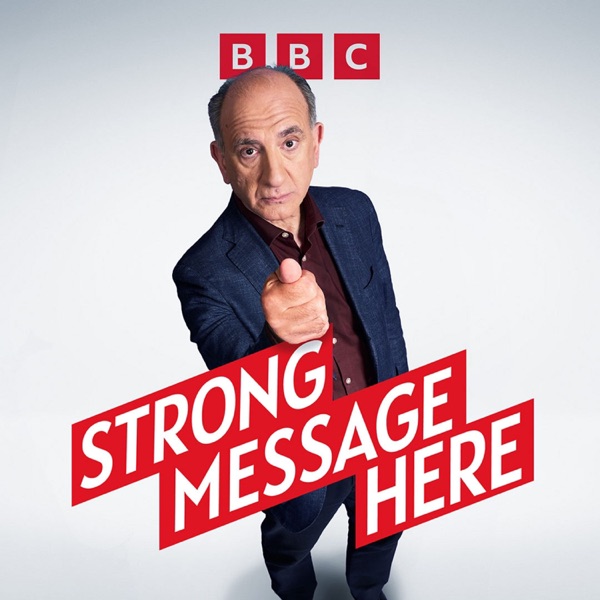
Armando Iannucci hosts the programme that gives you a cast-iron guarantee to be laser-focused on decoding the baffling world of political language.
Each week he'll be joined by a guest to crack open the political phrasebook and attempt to demystify the doublespeak. Why does everything now have to be 'turbo-charged'? What's the difference between a 'pledge' and a 'mission'? Why has my local MP been 'weaponised' and should I be worried?
You'll be treated to a crash course in the dark arts of political language from people on the inside who are both baffled and beguiled by it. They'll walk you through the various verbal fiascos of the modern political lexicon so that by the end you'll be oven-ready for an appearance on Newsnight.
Armando's erstwhile partner in de-baffling political lexicon, Helen Lewis, is away working in the United States in the autumn and so her seat will be kept warm by a rotating cast of co-hosts.
Listen to Strong Message Here on Thursdays on Radio 4 at 9.45am, and an extended version is available on BBC Sounds.
Produced by Gwyn Rhys Davies. A BBC Studios Production for BBC Radio 4.
00:00
00:00
Epizód összefoglalója
Este episódio apresenta um show de comédia satírica na Edinburgh Fringe, onde Iain Smith e seus convidados discutem notícias globais, desde tensões geopolíticas entre EUA e Irã até as táticas de negociação de Donald Trump. O programa também aborda temas cotidianos como dicas absurdas para combater a procrastinação e histórias enviadas pela audiência sobre golpes digitais, o impacto das redes sociais e experiências em empregos inusitados.
Fejezetek
Kattints egy fejezetre, hogy közvetlenül ahhoz a pillanathoz ugorj
Kiemelések
The most annoying thing about this war is I didn't know where the Strait of Hormuz was before it started, and if there's one thing that really upsets me, it's being made to learn geography against my will.
00:04:10 · O apresentador faz uma piada sobre o desconforto de ser forçado a aprender geografia devido às notícias de guerra.
I think the best way to stop procrastinating is to have a child.
00:07:03 · Uma sugestão humorística e extrema dada por uma das participantes para evitar a procrastinação.
And now I'm terrified because if he believes that's real, he's not seen AI yet.
00:16:41 · O apresentador expressa preocupação com a vulnerabilidade de pessoas idosas diante da evolução da inteligência artificial.
I love social media. I think it's so good. I love it for children. I think it's really healthy.
00:21:49 · Harriet faz um comentário sarcástico sobre os benefícios das redes sociais para crianças.
the most unusual job she's ever had was standing at a conveyor belt, picking out slugs, etc., as peas went past before being frozen.
00:24:30 · Uma sugestão da audiência descreve uma experiência de trabalho extremamente incomum e peculiar.
Este episódio apresenta um show de comédia satírica na Edinburgh Fringe, onde Iain Smith e seus convidados discutem notícias globais, desde tensões geopolíticas entre EUA e Irã até as táticas de negociação de Donald Trump. O programa também aborda temas cotidianos como dicas absurdas para combater a procrastinação e histórias enviadas pela audiência sobre golpes digitais, o impacto das redes sociais e experiências em empregos inusitados.
Közzétéve24 aug. 2026
Időtartam29:07
Epizódok
90-
Your Next Listen: The People Have Spoken
Meghallgatva
Este episódio apresenta um show de comédia satírica na Edinburgh Fringe, onde Iain Smith e seus convidados discutem notícias globais, desde tensões geopolíticas entre EUA e Irã até as táticas de negociação de Donald Trump. O programa também aborda temas cotidianos como dicas absurdas para combater a procrastinação e histórias enviadas pela audiência sobre golpes digitais, o impacto das redes sociais e experiências em empregos inusitados.
24 aug. 2026
88-
Doing Politics Differently (with Phil Wang and Pierre Novellie)
Meghallgatva
In this episode of Strong Message, hosts Phil Wang and Pierre Novelli analyze the political language used by Andy Burnham, specifically his promises to do politics 'differently' through a focus on 'place first, not party first.' The discussion explores the marketing-like nature of his rhetoric, comparing it to corporate branding and debating whether such long-term promises are effective or merely rebranding old political ideas.
The hosts also discuss the political branding of figures like Kemi Badenoch and examine Donald Trump's use of simplified, populist language. Additionally, the episode explores linguistic trends such as the 'Manchesterification' of politics and the rise of corporate jargon, concluding with an analysis of rhetorical deflection techniques used by politicians.
01 júl. 2026
87-
A Swift Transition (with Matt Forde and Ria Lina)
Meghallgatva
Este episódio analisa a transição de liderança no Partido Trabalhista do Reino Unido, focando no discurso de renúncia de Keir Starmer e comparando seu estilo político ao de figuras como Boris Johnson e Andy Burnham. O debate aborda a legitimidade de sucessões sem disputa eleitoral e o risco de uma 'coroação' política.
A discussão explora ainda as diferenças entre o 'Manchesterism' de Burnham e a falta de identidade ideológica do 'Starmerism', além de examinar como o uso de linguagem política, metáforas controversas e estratégias de comunicação podem moldar ou prejudicar a percepção pública de líderes e partidos.
24 jún. 2026
86-
It's All Signed (with Stewart Lee)
Meghallgatva
In this episode of Strong Message, Andrew and Stuart explore the linguistic ambiguity used in political negotiations, specifically examining how phrases like 'memorandum of understanding' and archaic terms like 'herewith' are employed to create an impression of officialdom without binding commitments. The discussion also touches upon Donald Trump's transactional approach to politics and his use of strategic distractions.
The conversation shifts to cultural archetypes and media impartiality, analyzing the concept of the 'Islington liberal consensus' and how certain labels are used to discredit critics. The hosts also share personal anecdotes regarding social media perceptions, the impact of hearing aids on daily life, and the accidental tyranny of pet food subscriptions.
17 jún. 2026
85-
Fanning the Flames (with Hugo Rifkind)
Meghallgatva
In this episode of Strong Message, Armand Iannucci and Hugo Rifkind explore the nuances of political language, examining the distinction between politicising and weaponising issues through phrases like 'fanning the flames.' The discussion delves into the linguistic impact of descriptors such as 'cold rage' and how terms like 'two-tier' and 'elites' are used to frame narratives around immigration and policing.
The speakers also critique the use of historical metaphors, specifically regarding D-Day, in modern political rhetoric. They analyze recent statements from figures like Donald Trump and J.D. Vance, concluding with a look at 'announceables'—the political tactic of using pre-announcements to seize the media agenda without the intent to deliver actual policy.
10 jún. 2026
84-
There's Been An Under-Discussion (with Natalie Haynes)
Meghallgatva
O episódio analisa o uso de linguagem técnica e política para suavizar os riscos existenciais da Inteligência Artificial, comparando a retórica do progresso tecnológico com fenômenos climáticos. A discussão aborda a postura de líderes como Tony Blair na esquiva de debates complexos e os perigos da atrofia do pensamento crítico humano diante da dependência tecnológica.
Além disso, o programa explora o lançamento do Objection.ai para auditoria jornalística e reflete sobre a crescente tensão entre tecnologia e humanidade, observando como a fragmentação da atenção e o uso de clipes curtos por políticos transformam a política em uma performance para redes sociais.
03 jún. 2026
83-
That's Not for Me to Say (with Munya Chawawa)
Meghallgatva
28 május 2026
82-
A Febrile Atmosphere (with Tom Peck)
Meghallgatva
21 május 2026
81-
We Can't Go On Like This (with Kiri Pritchard-McLean and Ayesha Hazarika)
Meghallgatva
14 május 2026
80-
Technological Republic (with Stewart Lee and Carole Cadwalladr)
Meghallgatva
07 május 2026
79-
Game On (with Natalie Haynes)
Meghallgatva
30 ápr. 2026
78-
The Process Was Followed (with Tim Shipman)
Meghallgatva
23 ápr. 2026
77-
Only the Fake News Would Come Up with This (with Amol Rajan)
Meghallgatva
16 ápr. 2026
76-
Righteous Targets for Violence (with Hugo Rifkind)
Meghallgatva
09 ápr. 2026
75-
That's a Great Question (with Stewart Lee in Laugharne)
Meghallgatva
02 ápr. 2026
74-
We're Here to Listen (with Stewart Lee in Laugharne)
Meghallgatva
26 márc. 2026
73-
You Don't Have to Worry (with Marina Hyde)
Meghallgatva
19 márc. 2026
72-
I Understand the Anxiety (with Ria Lina and Coco Khan)
Meghallgatva
12 márc. 2026
71-
Get Real (with Hugo Rifkind)
Meghallgatva
05 márc. 2026
70-
History Will Judge You (with Stewart Lee)
Meghallgatva
26 febr. 2026
69-
For the Sake of Transparency (with Natalie Haynes and Michael Gove)
Meghallgatva
19 febr. 2026
68-
Psychodrama (with Stewart Lee)
Meghallgatva
12 febr. 2026
67-
You've Let Your Country Down (with Emily Maitlis)
Meghallgatva
05 febr. 2026
66-
Are You a Stupid Person? (with Natalie Haynes)
Meghallgatva
29 jan. 2026
65-
U-Turns and Turncoats (with Stewart Lee)
Meghallgatva
22 jan. 2026
64-
Elections Aren't Won on Twitter (with Phil Wang and Marianna Spring)
Meghallgatva
15 jan. 2026
63-
Regime Change (with Natalie Haynes)
Meghallgatva
08 jan. 2026
62-
Listeners' Strong Messages (with Stewart Lee)
Meghallgatva
01 jan. 2026
61-
Words of the Year (with Natalie Haynes)
Meghallgatva
18 dec. 2025
60-
Civilisational Erasure (with Stewart Lee)
Meghallgatva
11 dec. 2025
59-
AI Hallucinations (with Stewart Lee and Sarah Wynn-Williams)
Meghallgatva
04 dec. 2025
58-
Spooking the Markets (with Natalie Haynes and Stewart Lee)
Meghallgatva
27 nov. 2025
57-
Moral Failure and Deadly Negligence (with Sara Pascoe and Matt Winning)
Meghallgatva
20 nov. 2025
56-
The Buck Stops Here (with Ria Lina and Sophy Ridge)
Meghallgatva
13 nov. 2025
55-
Be Vigilant (with Phil Wang)
Meghallgatva
06 nov. 2025
54-
Deep Disillusionment in This Country (with Stewart Lee)
Meghallgatva
08 ápr. 2026
53-
In Hindsight (with Ria Lina and Tim Shipman)
Meghallgatva
23 okt. 2025
52-
The End of the Age of Terror and Death (with Stewart Lee)